Why Neither Side Wants the Truth About Voter ID
Voter ID is treated like a five-alarm fire in American politics. That reaction says more about our dysfunctional political system than it does about voter ID itself.

Voter ID is treated like a five-alarm fire in American politics. That reaction says more about our dysfunctional political system than it does about voter ID itself.
Polls consistently show that about 80 percent of voters support some form of voter identification. That includes Democrats, Republicans, and independents. By any normal standard, that is a broad agreement. In a healthier system, issues with that level of support would not turn into endless political warfare.
But voter ID has. Not because voters are divided, but because our politics are.
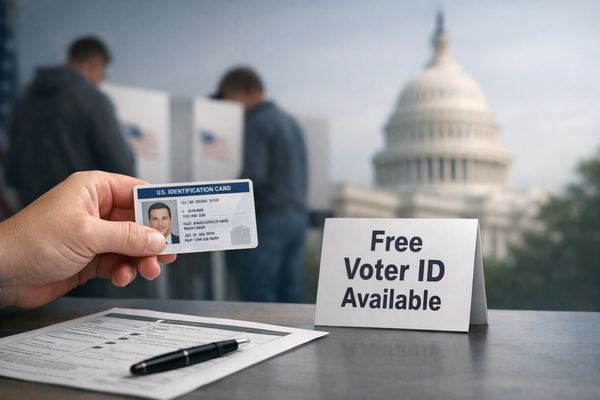
Most people do not see voter ID as extreme. They show ID to fly, cash checks, pick up prescriptions, or enter government buildings. Verifying identity before voting strikes many voters as basic election administration.
Where the debate truly breaks down is in the exaggeration on both sides.
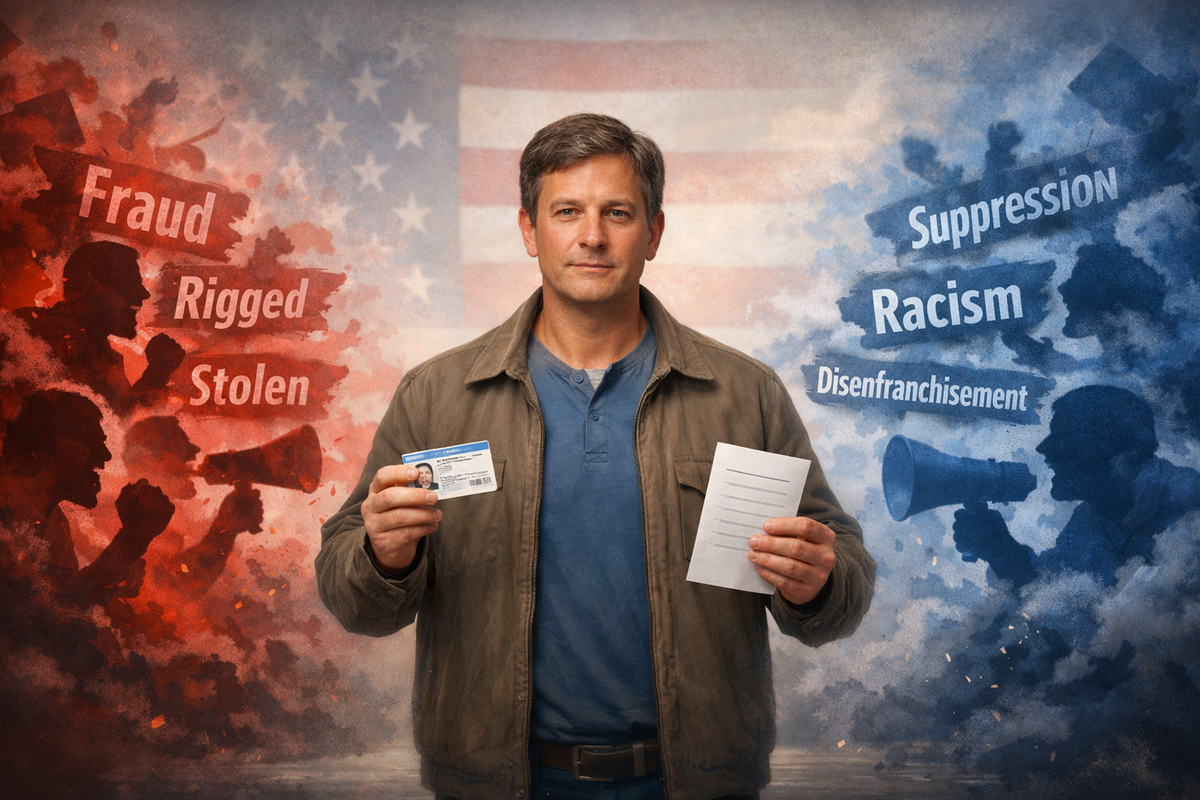
On the left, voter ID is treated as voter suppression by definition. Concerns about election integrity are dismissed outright. The impression many voters are left with is that nothing improper has ever happened, no election has ever been compromised, and the system is already flawless.
On the right, the story flips entirely. Voter fraud is described as widespread. Elections are portrayed as rigged or stolen. Limited problems are stretched into proof that the entire system cannot be trusted.
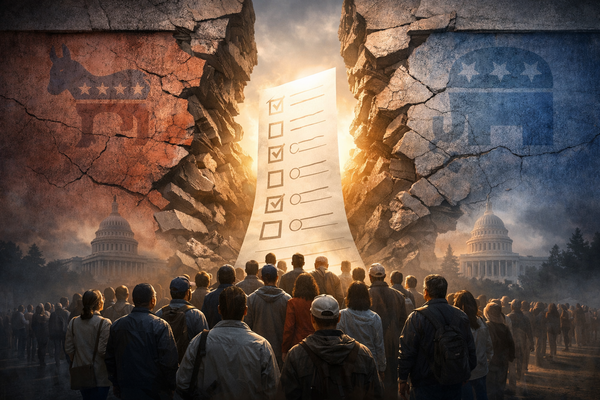
Both positions are probably overstated. And together, they make honest discussion almost impossible.
We are living in a moment where polarization and outrage drown out moderation. When every issue is framed in absolutes, the best idea for most people rarely makes it to the surface.
This atmosphere also punishes anyone who breaks ranks. A Democrat who supports voter ID risks being labeled a supporter of voter suppression or worse. A Democrat who opposes voter ID is accused of being indifferent to fraud or wanting noncitizens to vote. Good faith disagreement is treated as betrayal.
California illustrates this stalemate clearly. Election officials say voter rolls are accurate. Democrats agree. Republicans insist the rolls include ineligible voters. That disagreement has persisted for years, not because it cannot be resolved, but because neither side trusts the other enough to let facts settle it.
From there, the fight shifts to process. What counts as acceptable ID? How would mail ballots be verified? How would the system work at scale? These details matter, and they have also become a reliable way to stop the conversation altogether.
That is why Assemblyman Carl DeMaio’s latest initiative has drawn so much attention. Not because the measure is reckless or sloppy, but because it is careful. It follows California’s single-subject rule. It directly addresses mail ballot verification. It allows a broad range of acceptable identification. On its face, it appears designed to meet constitutional standards that have derailed past efforts.
A voter ID proposal that is popular and hard to dismiss on legal or technical grounds forces political actors to confront something they would rather avoid. Voters are not confused about what they want.
If voter fraud is as widespread as some on the right claim, voter ID should expose it. If it is not, that will become clear as well. If voter ID leads to real voter suppression, the evidence will surface. If it does not, that claim should lose its power.
Either way, reality replaces rhetoric.
Democrats, in particular, could call the Republican bluff by agreeing to voter ID with clear safeguards. Free IDs. Broad eligibility. Automatic issuance. Strong protections for access. If voter ID turns out to be unnecessary, the policy itself will prove it. If it causes harm, that harm will be visible and correctable.
Once a system is tested honestly, exaggerations on both sides collapse.
Voters are not asking for perfection. They are asking for honesty. When a large majority agrees on something this basic, the system should be able to respond without panic.
The question is not whether voter ID is inherently good or evil. The question is why a system built to serve voters is so afraid to find out what is actually true.